Blisters. Veteran hikers and backpackers have all learned how to prevent heel blisters and foot blisters, often after first having the fun of a hike or trek ruined when they ignored the rules of blister prevention.
Most hikers cringe at the thought of getting blisters on their feet because once you’ve allowed them to develop, you’ll be suffering through the rest of your hike or trek.
The most common places for blisters to develop while hiking or backpacking are on the ball of your foot, on the sides or tops of your toes, or on your heel.
So, how do blisters form and what are the best ways to prevent them?
Prevent heel blisters and foot blisters by layering your socks
If you choose your hiking socks carefully, and always wear thin moisture-wicking liner socks inside your hiking socks, you’ll find that blisters are much easier to prevent.
Heel blisters or foot blisters develop mostly from the friction of your skin rubbing against your hiking socks, so by using water-wicking liner socks that cling to your foot, you can transfer any friction to the two layers of socks and away from your skin.
The special moisture-wicking liner socks also work as the name implies and move moisture away from your feet and into the outer hiking socks, further preventing skin friction sometimes caused by a buildup of moisture on your feet.
It really doesn’t matter at all just how brave you think you are, or how tough you think your feet are. What matters is that you take every possible precaution to keep your feet and heels in great condition — completely free of blisters or hot spots.
Don’t be macho and stupid at the same time. Pay attention to the warnings and suggestions about using liner socks!
Hot spots lead to blisters
If a part of your foot or heel is feeling a bit raw while hiking, then you should immediately stop and examine your foot for red areas. These red marks are called hot spots, and they are the base upon which blisters form. In fact, hot spots are a great way for your feet to warn you that a blister is on the way.
Friction causes the heat in that area of your heel or foot to separate the inner parts of your skin. Fluid then fills into these empty spots, surprisingly quickly, so take action right away when you feel a hot spot developing. If you have a hot spot, you should replace your socks with dry ones if at all possible, or at least move your socks around a bit to prevent friction against any wrinkled or bunched up parts of your socks that might rub you the wrong way.
While hiking or backpacking, take advantage of rest stops or food breaks along the way to completely remove your boots and socks. Drape the socks across your pack (in the sun if possible) to let them dry out. Your feet will be much drier and refreshed when you continue your hike after the break. It’s also the perfect time to inspect your feet for early signs of problems.
Prevent heel blisters and foot blisters by taping your heels
In addition to the tips above, you can also prevent heel blisters by putting moleskin or athletic tape across your heels before blisters have a chance to form, especially if you have had heel blisters in the past. You can also apply a preventative layer across any red area as an extra protection against a blister forming.
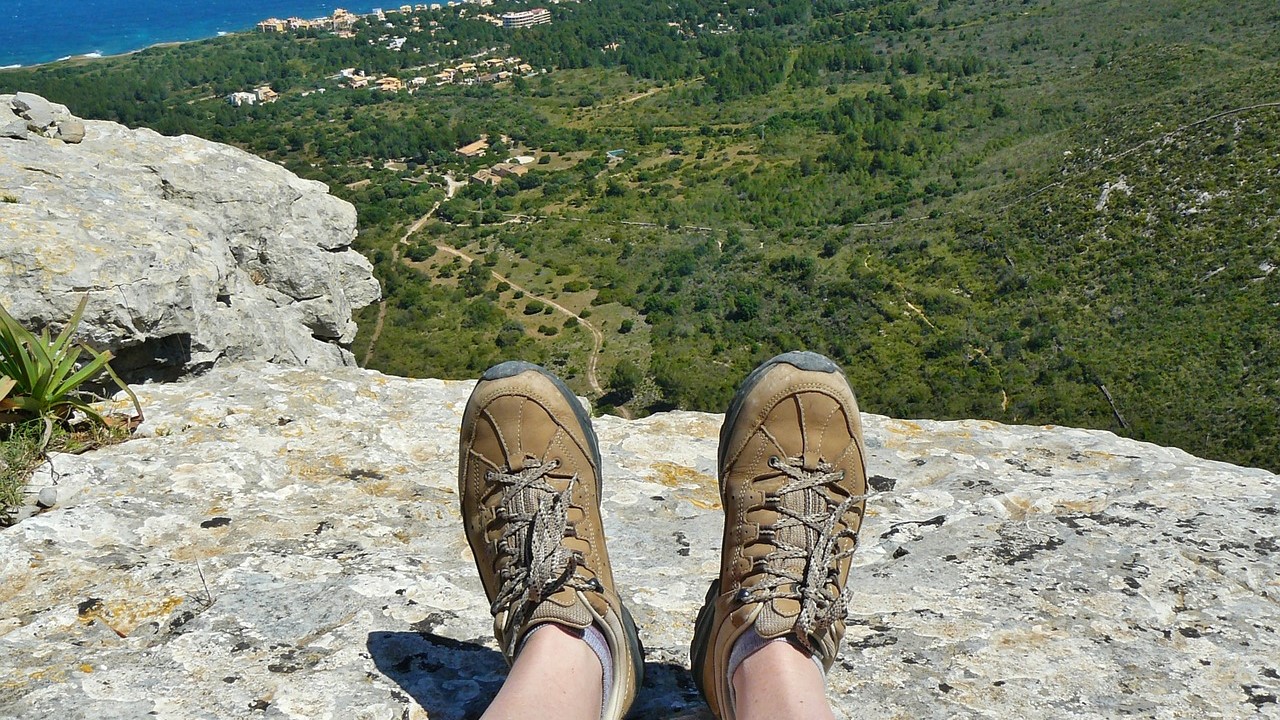
You can help prevent heel blisters by making sure your hiking shoes or hiking boots are sized correctly when wearing your liners and hiking socks. Too large, and they can move up and down against your heels as you walk; too small, and other parts of your feet or toes can be pinched and more quickly develop blisters.
Blister prevention using common sense
You can usually prevent heel blisters and foot blisters with a good application of common sense.
- Don’t underestimate the importance of healthy feet when hiking and backpacking.
- Be extra careful when hiking over rocky trails, because your feet will experience more friction and stress.
- Stop at the first sign of hot spots or friction against your skin.
- Always take along some moleskin, blister plasters and athletic tape.
So be sure to carefully follow all of the tips above and you’ll find that it’s much easier to prevent heel blisters or foot blisters from ruining your hike. Take care of your feet and they’ll take care of you!